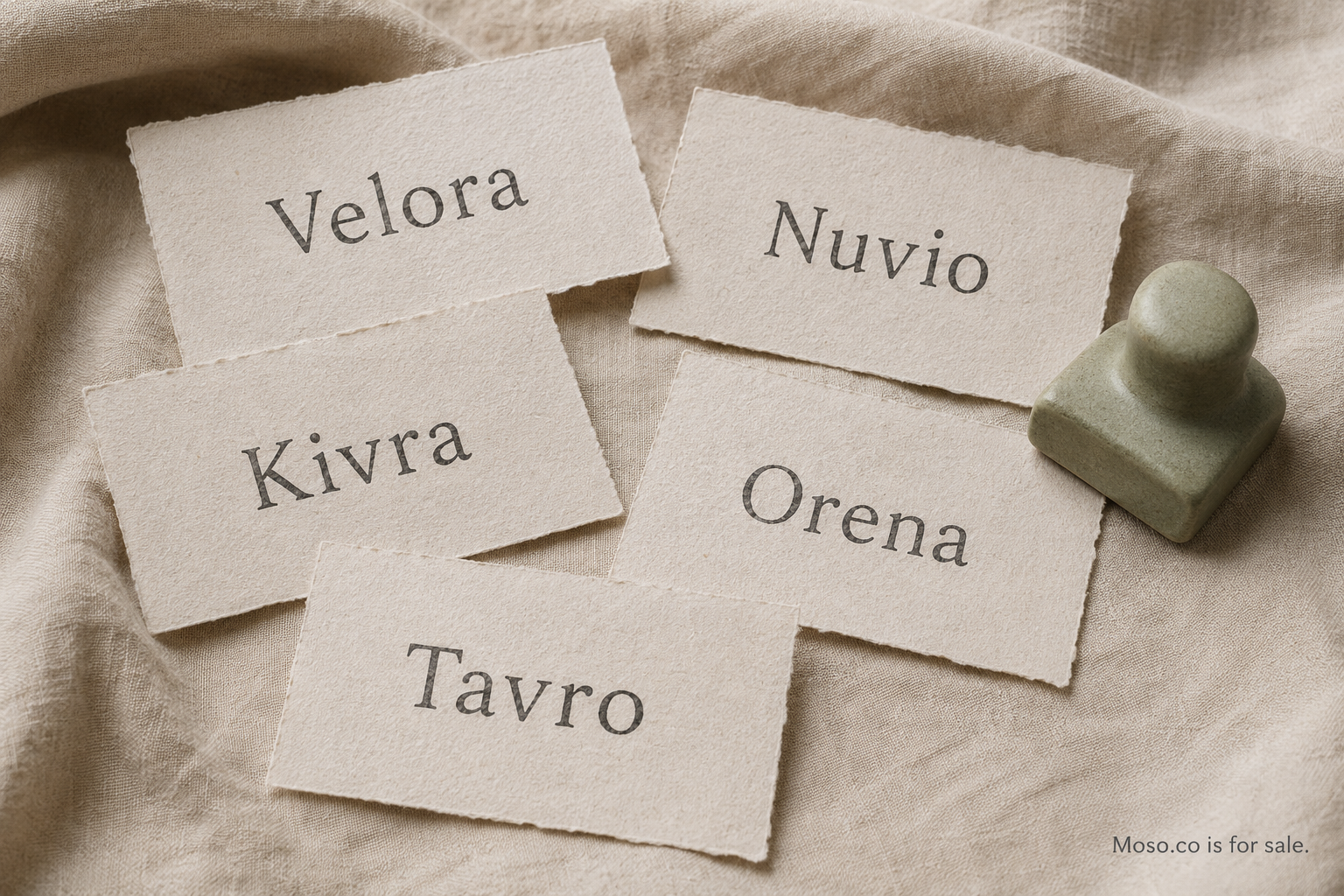
A brandable domain name is an address chosen for identity rather than for a literal summary of the product. It may be a real word used in a new context, a compact compound, or an invented term. Its job is to become distinctive in the mind of an audience while remaining usable in speech, type, and design. A good brandable domain gives a company room to define meaning instead of borrowing all of its meaning from a search phrase.
Founders meet the phrase constantly on marketplaces and in naming threads, and still walk away with a fuzzy definition. Some people use brandable as a synonym for made up. Others use it for any name that is not an exact-match keyword. A more useful definition is operational. A brandable domain is one you would put on a business card as the company, not as a description of the offer. Tutorials such as Hostinger's guide to brandable domain names start from that identity job: the name has to travel, not merely rank.
Brandable compared with descriptive
A descriptive domain tells the visitor what the company offers. That clarity can be useful, especially for a focused local service or a narrow product. A brandable name works differently. It creates a mark that can hold associations over time. The tradeoff is simple. The business may need to explain the offer more clearly at first, while gaining more freedom to expand and distinguish itself later.
Brandings, in its explainer on what brandable domain names are, uses the empty-vessel idea. An empty vessel begins with few existing associations. That can be an invented word, or a real word whose common meaning is not the business. The vessel is valuable only if people can say it, spell it, and remember it. Emptiness without usability is just obscurity.
Curated catalogs at BrandBucket and Atom (formerly Squadhelp) show the range of constructions commonly sold as brandable names: coined two-syllable marks, compounds, slightly twisted real words, and short letter patterns. The catalogs are useful for pattern recognition. They also show why the label alone says little about quality. Two pronounceable names can differ sharply in spelling burden, tone, category fit, and memorability.
What makes a name brandable in practice
Pronounceability comes first. If a listener cannot repeat the name after one hearing, the brand will spend years correcting people. Spelling comes next. A name that requires a phonetic footnote on every package is charging a tax on every referral. Length matters because short names are easier to set, stamp, and remember, though shortness without speech is a trap. A four-letter jumble is short and still unusable.
Tone is a separate test. Some invented names feel technical. Some feel playful. Some feel soft. The question is whether that register matches the company you intend to build, not whether the name sounds fashionable this quarter. Distinctiveness is the legal and commercial cousin of tone. A name that disappears into a crowd of similar stems will cost more to defend and more to remember.
The domain is part of the name. Added words, alternate spellings, and unusual extensions affect how the identity travels. A clean matching address reduces explanation because listeners often assume a simple ending. Availability is only the start of the decision. The address still has to fit the business you actually want to run in three years, not only the landing page you can design this week.
Tests worth running before you fall in love
Say the candidate in an introduction. Put it in a sentence of recommendation. Ask another person to type it after hearing it once. Set it in a small browser tab and on a plain invoice. These exercises expose friction that a polished logo can conceal. They also show whether the word has enough shape to remain recognizable when the design system changes.
Search the candidate with category terms. Look across app stores and social platforms. Listen for similar sounds as well as identical spellings. These checks are separate from legal clearance, yet they can reveal practical crowding. A word may be technically available and still create a confusing public environment. Keep notes so the team can compare evidence rather than memories.
Then decide what kind of brandable you actually need. An empty vessel is right when the company expects to outgrow its first product. A suggestive compound is right when a small clue helps the first conversation. A real word used sideways is right when you want familiarity plus a twist. The definition does not pick the winner. The brief does.
A useful definition
A brandable domain name is a web address with enough distinctiveness to function as a company identity and enough usability to survive ordinary communication. It does not need to be strange. It needs to be recognizable, repeatable, and capable of gathering the meaning the business intends to create. If a candidate cannot pass a radio test, a typing test, and a three-year expansion test, calling it brandable does not make it a good name. It only makes it a listing category.
Treat the purchase as the beginning of identity work, not the end. Secure the address, document spelling and pronunciation, and give the name a consistent introduction. Let customers meet it through a useful product and clear language. A brandable domain earns its keep through encounters. Every coherent encounter makes the next one easier. That is the standard I use when I look at a short invented mark and ask whether it is actually brandable, or only labeled that way.
I also ask teams to write the name into the places it will live in month twelve, not month one. An email signature. A support reply. A packing slip. A job post. Those documents reveal whether the word still feels like a company or whether it has started to need a second, more descriptive nickname. If the nickname arrives early, the brandable was never doing the identity job. It was only occupying a URL.
Marketplace language can confuse this point. Ready-made, hand-picked, and premium are sales adjectives. They do not tell you whether a receptionist can take a message. Before you buy, borrow the name for a day. Use it in two real conversations. Write it on a lined page in ordinary handwriting. If it feels like a costume, it will feel like a costume to customers too. A brandable domain should feel slightly empty at first and still feel possible to live in. That combination is rarer than a pleasant listing photo.