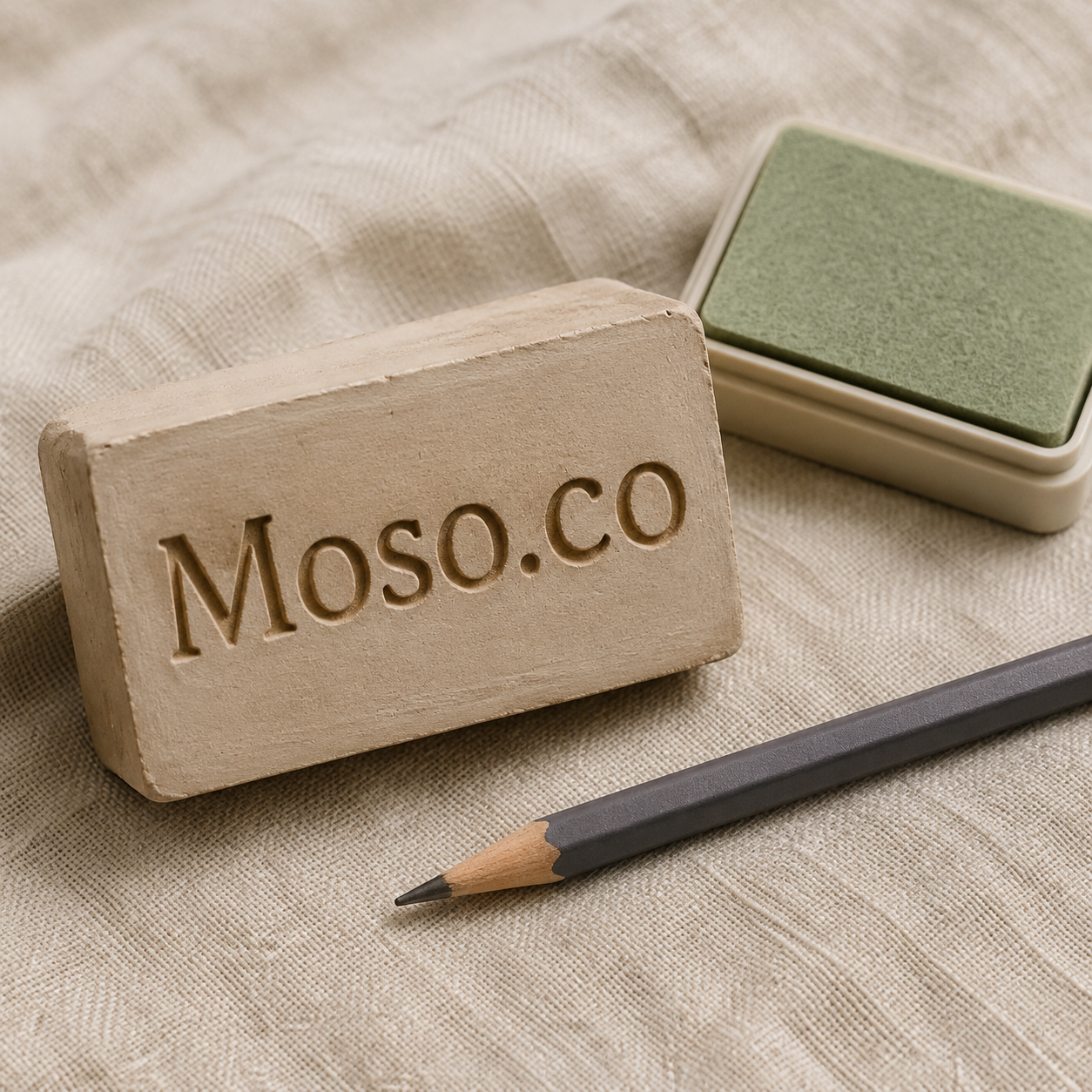
I see Moso.co as a studio name: a creative or product practice that wants a clean invented mark over a founder surname. Surnames travel until they do not. They become hard to spell, hard to share, or too tightly tied to one person when the work needs a room that can hold collaborators. An invented two-syllable word can belong to the practice itself. Moso has that quality. It is short enough for a tab, a invoice line, and a spoken introduction, and it does not ask a client to remember a family spelling.
I am not describing a studio that already exists. I am describing a possible shape. The practice could be design, product, strategy, film, or a mix that still needs one public word. What matters is that the name can sit on the door without explaining the method. Method belongs in the work. The name belongs in the introduction. Editorial design writing at Design Observer often returns to that split: the public identity should be memorable, while the craft stays specific.
Why I would leave the surname
A founder surname can feel honest. It also creates a succession problem and a pronunciation problem. I have watched teams outgrow the personal mark and then spend a year explaining the change. Starting with an invented studio name avoids that later tax. Moso can include more than one principal. It can hire. It can publish. It can open a second city without reprinting a family tree.
The word is soft, which suits a practice that wants to be invited into other people's problems rather than arriving with a loud manifesto. Clients remember names they can repeat in a procurement chain. Four letters help. Two syllables help more. Brand New, the identity review run by UnderConsideration, is full of studio identities that look considered and still fail the phone test. I would rather pass the phone test first and let the visual system catch up.
I would keep the first identity modest. One type family. One dark ink. One paper. A studio that designs for other people should not spend its first year performing a costume. Moso is already a complete spoken unit. Over-drawing it will only make the practice look restless. Let case studies, not ornament, fill the site.
How the name would work in the room
Studios live in emails, decks, credits, and hallway introductions. I would use Moso as the institutional voice and keep personal names for bylines and credits. That is how a practice can be both human and durable. A client can say they are working with Moso. A designer can still sign the page. The invented word holds the room. The people inside it remain visible.
Spatial and identity studios such as 2x4 show how a compact name can cover exhibitions, environments, and brand systems without becoming a category phrase. I would aim for that kind of coverage. If the studio later adds a small product edition or a publishing desk, the parent name should still fit. That is the advantage of an empty vessel: the work can change shape without a legal rename.
I also like that Moso does not sound like a software feature. Plenty of studios now hide inside product vocabulary that will date. This word does not. It can sit beside a physical model, a film still, or a strategy memo. Culture and practice coverage at It's Nice That keeps showing how names either stay out of the way of the work or start competing with it. Moso stays out of the way.
The builder this would need
This direction fits principals who already have a craft and need a public container that can outlast a single founder bio. I would write a one-page name standard on day one: pronunciation, capitalization, domain, email pattern, and the rule that category words do not get glued to the mark. Then I would put the name on the work rather than on a manifesto.
The site for such a studio should be quiet. Case studies first. A short about. A clear inquire path. The domain Moso.co becomes both the name and the address, which is a small daily gift. No extra invented URL. No explanation of a personal spelling. The practice can spend its words on the client problem instead of on its own label.
I would not claim that an invented studio name creates taste. Taste still has to be in the work. What the name can do is remove friction from every later mention. That is the studio I would try to build on Moso.co: a clean invented practice mark, a room that can hold more than one person, and a public word that stays soft while the craft stays specific.